
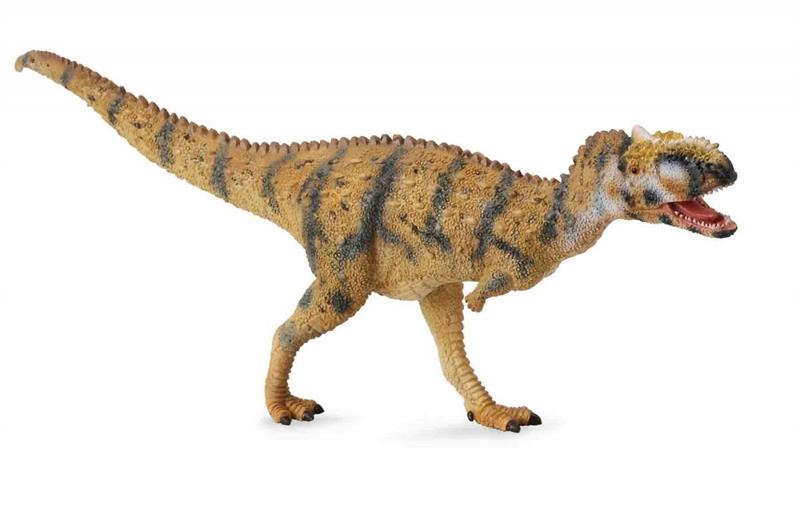
CollectA Rajasaurus - Indian Horned Theropod Dinosaur Figurine #88555
The Princely Lizard of India!
The CollectA Rajasaurus #88555 brings one of India's most impressive predators to life with exceptional detail. This powerful theropod featured a distinctive horn-like crest on its head and a prominent bony ridge running down its spine. CollectA's expertly sculpted replica captures every detail of this fascinating dinosaur, from the cranial horn to the serrated teeth that made Rajasaurus a formidable hunter in Late Cretaceous India.
India's Princely Predator
Rajasaurus, meaning "princely lizard" or "king lizard," lived approximately 70-66 million years ago during the Late Cretaceous Period in what is now Gujarat, India. First discovered in the early 1980s and formally described in 2003, this impressive predator grew to approximately 29.5 feet in length and weighed up to 4 tons. The distinctive horn on its head made Rajasaurus one of the most recognizable dinosaurs from the Indian subcontinent.
Key Features
- Distinctive Cranial Horn: Accurately depicts the prominent horn-like crest on the head
- Bony Spinal Ridge: Shows the ridge running along the spine
- Serrated Teeth: Detailed dentition characteristic of carnivorous theropods
- Powerful Build: Robust body reflecting its 4-ton weight
- Scientifically Accurate: Based on fossil discoveries from Gujarat, India
- Hand-Painted Detail: Expert coloring with natural tones and shading
- Museum-Quality Sculpting: 6.7" figurine captures the proportions of this apex predator
- CollectA Excellence: Exceptional detail at an affordable price
Discovered in Gujarat, India
The first Rajasaurus fossils were discovered in the early 1980s in the Narmada River valley in Gujarat, India. The discovery was significant because it revealed a large predatory dinosaur unique to the Indian subcontinent. The formal description in 2003 named it Rajasaurus narmadensis after the Narmada River region where it was found. The discovery helped paleontologists understand the unique dinosaur fauna that evolved on the isolated Indian landmass.
Perfect For
- Theropod and carnivorous dinosaur collectors
- Cretaceous Period dioramas and displays
- Educational collections about Indian dinosaurs
- Collectors seeking dinosaurs from Asia
- Imaginative play featuring apex predators
- Pairing with other Indian dinosaurs
- Young paleontology enthusiasts ages 3 and up
- Fans of horned theropods
The Distinctive Cranial Horn
Rajasaurus's most striking feature was the prominent horn-like crest on top of its skull. This bony protrusion, formed by the nasal bones, may have been used for display, head-butting rivals during mating season, or species recognition. The horn gave Rajasaurus a fearsome appearance and made it instantly distinguishable from other theropods.
Related to Carnotaurus
Rajasaurus belonged to the abelisaurid family of theropods, making it a relative of the famous South American predator Carnotaurus. Like other abelisaurids, Rajasaurus had a relatively short, deep skull, small arms, and powerful hind legs. The presence of abelisaurids in both India and South America provides evidence of ancient land connections between these continents during the Cretaceous Period.
Apex Predator of Late Cretaceous India
As one of the largest predators in Late Cretaceous India, Rajasaurus was an apex predator that likely hunted the sauropods and other herbivorous dinosaurs that shared its habitat. The powerful jaws lined with serrated teeth could deliver devastating bites, while the robust build allowed it to tackle large prey. Rajasaurus ruled the river valleys and floodplains of ancient India.
Educational Value
This Rajasaurus figurine offers excellent educational opportunities about Indian dinosaurs, the abelisaurid family, and how isolated landmasses developed unique dinosaur faunas. Children and adults can learn about the Late Cretaceous Period, Asian dinosaurs, and the ancient geography that allowed different dinosaur groups to evolve on different continents.
India's Isolated Dinosaur Fauna
During the Late Cretaceous, India was an island continent drifting northward toward Asia. This isolation allowed unique dinosaurs like Rajasaurus to evolve separately from dinosaurs on other continents. The discovery of Rajasaurus and other Indian dinosaurs helps paleontologists understand how geographic isolation influences evolution.
CollectA Prehistoric Life Collection
Part of CollectA's renowned Prehistoric Life collection, this Rajasaurus represents the company's commitment to scientific accuracy and depicting dinosaurs from around the world. CollectA works with paleontologists to ensure their dinosaur replicas reflect the latest scientific discoveries, making them valuable educational tools and prized collectibles.
Pairs Beautifully with Other Dinosaurs
Display this Rajasaurus alongside other abelisaurids like Carnotaurus or Majungasaurus to show the geographic distribution of this theropod family, or pair it with Indian sauropods to create authentic Late Cretaceous scenes from the Indian subcontinent.
Safe for Young Paleontologists
Made from high-quality, non-toxic materials, this dinosaur figurine is safe for children ages 3 and up. The durable construction withstands active play while maintaining its detailed features, making it perfect for both display and hands-on dinosaur adventures.
About CollectA: CollectA is renowned worldwide for creating scientifically accurate, highly detailed prehistoric animal replicas. Their Prehistoric Life collection features dinosaurs, marine reptiles, and prehistoric mammals that reflect the latest paleontological research.
Specifications: Rajasaurus in dynamic pose | Hand-painted with realistic detail | Distinctive cranial horn | Bony spinal ridge | 6.7"L | 0.5 lbs
Period: Late Cretaceous (approximately 70-66 million years ago)
Location: Asia (Gujarat, India)
Diet: Carnivore (meat-eater)
Size: Approximately 29.5 feet long, up to 4 tons
Classification: Theropod (abelisaurid)
Item #: 88555
Ages: 3+ years
Standard shipping
Estimated delivery time: 7-10 days